
Women in 1950s Sci-Fi
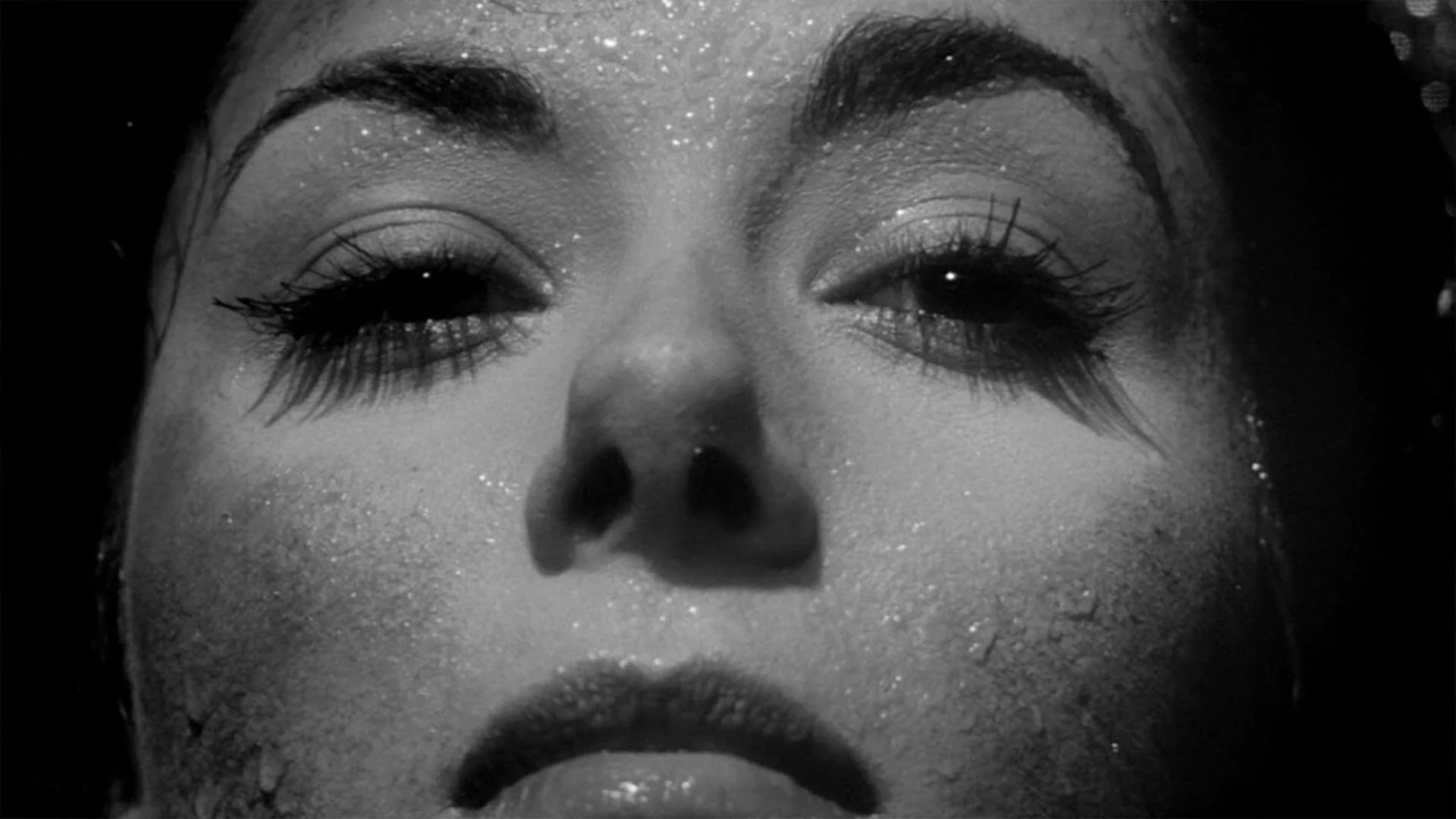
The future had rockets, robots, alien civilizations, and cities on the edge of annihilation — but it still had a hard time imagining women as full participants.
In 1950s sci-fi, women were often trapped in a narrow orbit: girlfriend, daughter, secretary, lab aide, screaming witness, moral anchor, or person who must be rescued before the third act can wrap up. Even when the movies were dreaming about interstellar travel, radioactive monsters, and advanced civilizations, they often dragged along the gender assumptions of their own decade like a suitcase full of sensible heels. The result is fascinating, frustrating, and very revealing.
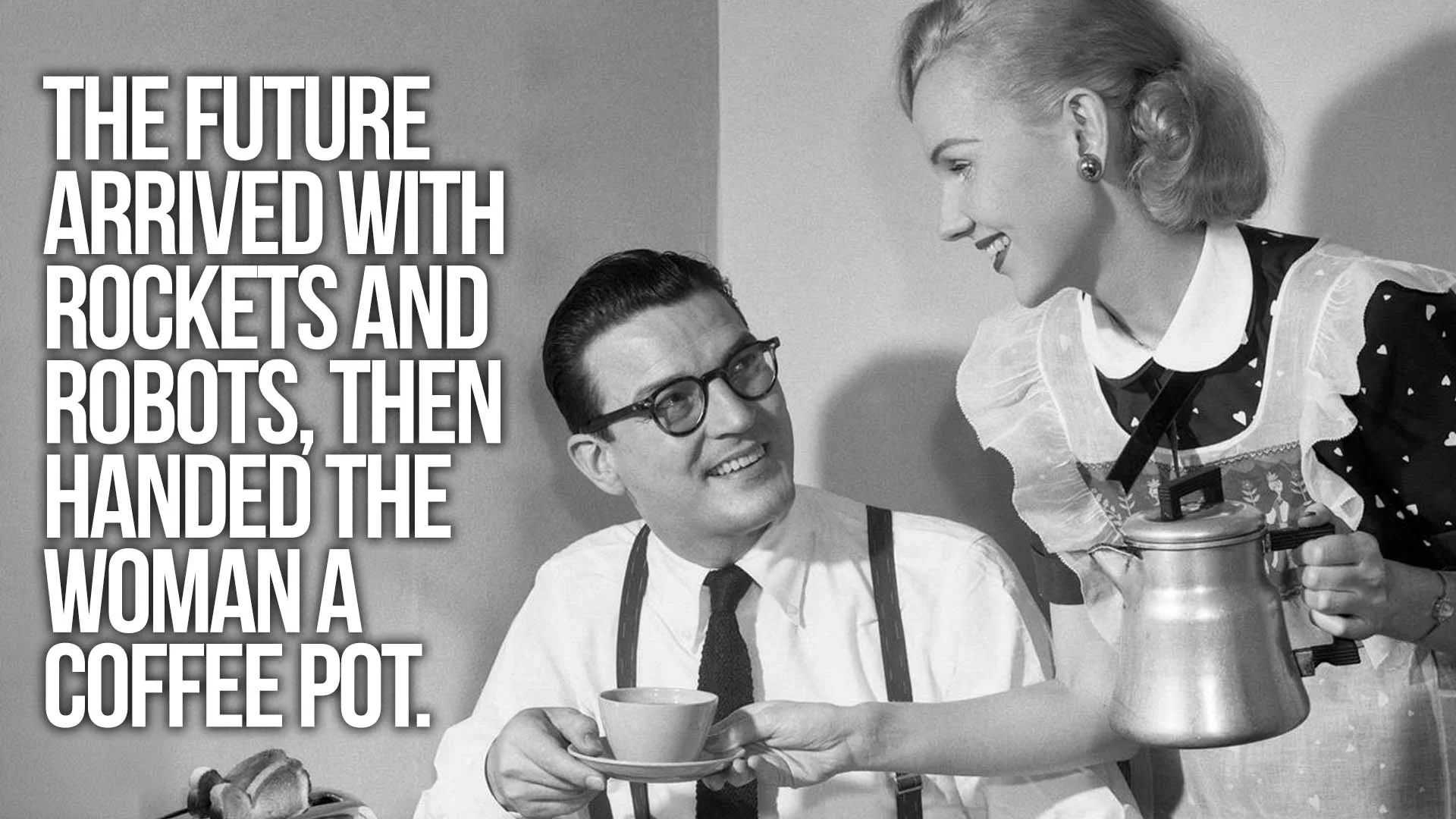
Tomorrow had rayguns, but somehow still needed coffee served.
-
Many 1950s sci-fi films limited women to supporting roles: girlfriends, assistants, victims, daughters, or emotional anchors.
The genre imagined bold futures in technology, space travel, and alien life, but often remained conservative about gender roles.
Some characters pushed against the limits, including Helen Benson in The Day the Earth Stood Still and Ellen Fields in It Came from Outer Space.
The tension is part of what makes these films worth revisiting: they reveal both the imagination and the blind spots of the era.
The Future Was Bold — Until a Woman Entered the Room
1950s sci-fi could imagine almost anything. Flying saucers hovering over Earth. Robots with moral authority. Alien civilizations with advanced technology. Monsters awakened by atomic testing. Lost planets. Strange minds. New sciences. The end of the world. The next stage of human evolution.
When a woman walked into the scene, suddenly, the imagination got very tired.
Too often, she became the girlfriend, the daughter, the lab assistant, or the person who screams so the poster has something to sell.
That is the strange contradiction at the heart of women in 1950s sci-fi. The genre was obsessed with the future, but its women were often stuck in the social expectations of the present. It could picture a robot smarter than humanity, but not always a woman scientist treated as seriously as the men in the room. It could imagine civilizations beyond Earth, but still found time to organize the plot around who gets protected, who gets explained to, and who gets grabbed by the monster.
This does not mean the films are worthless. Not even close. Some are brilliant. Some are gorgeous. Some are weird little treasures. But the gender politics are right there on the screen, waving from behind the control panel.
And once you notice them, you cannot unnotice them.
The Girlfriend Was Often a Plot Device With Lipstick
One of the most common roles for women in 1950s sci-fi was “the girlfriend.
Not a bad person. Not necessarily poorly acted. Often charming. Often sympathetic. Sometimes smarter than the movie allows her to be. But structurally, she was frequently there to humanize the male hero, worry about him, believe him eventually, get endangered, and provide a romantic ending after the monster had been handled. That role is not nothing. But it is limited.
The girlfriend often serves as emotional confirmation. If she believes the hero, the hero is validated. If she doubts him, he must prove himself. If she is captured or threatened, the stakes become personal. If she survives, the film can end with civilization and heterosexual normalcy restored — preferably with everyone looking relieved and no one asking too many follow-up questions about trauma.
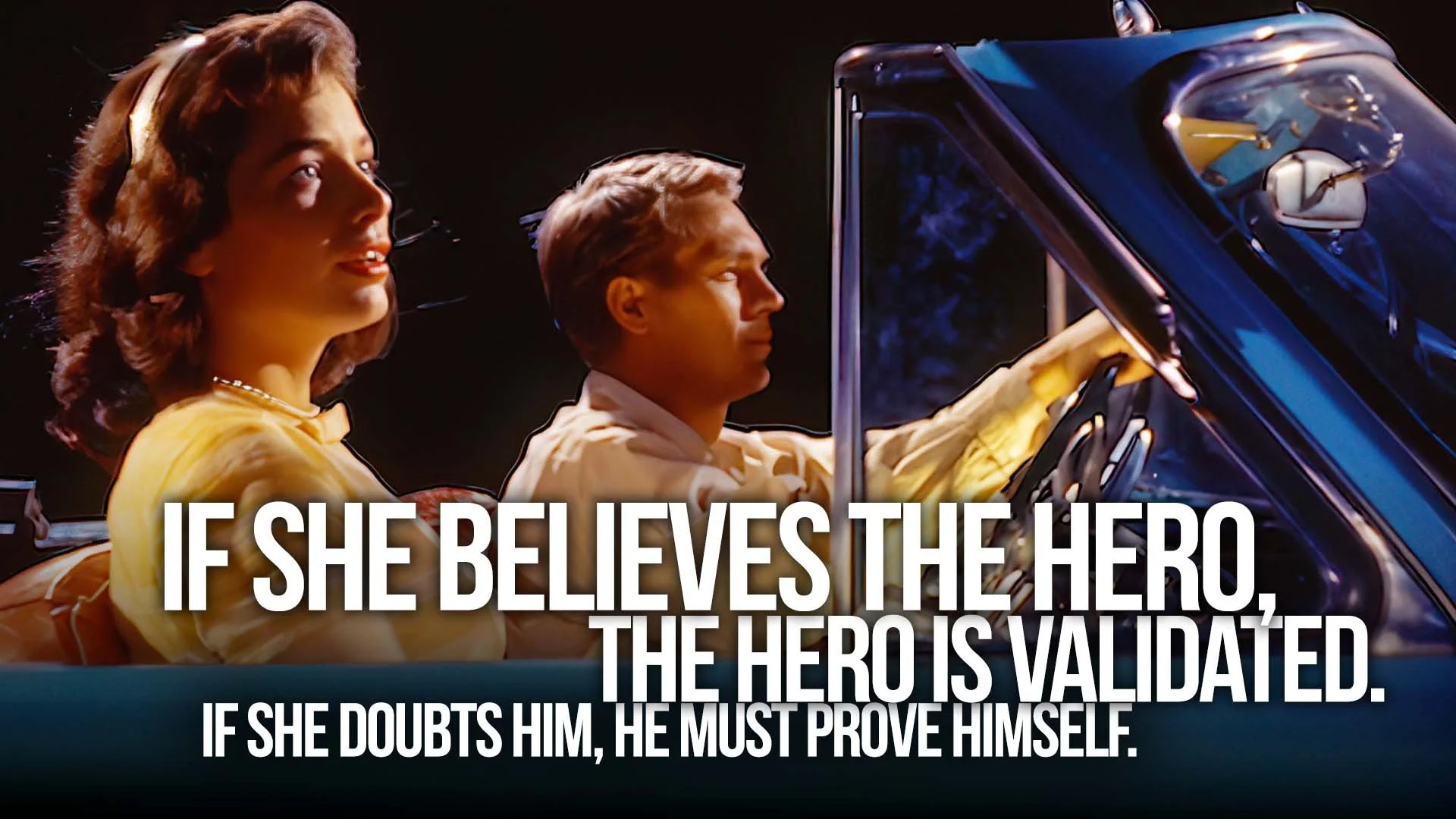
In It Came from Outer Space from 1953, Barbara Rush plays Ellen Fields, a schoolteacher and the fiancée of amateur astronomer John Putnam. The film gives her more presence than some sci-fi girlfriends of the era, and Rush won a Golden Globe as most promising female newcomer for the role, but the story is still centered on John’s perception, credibility, and investigation. Ellen matters, but the movie’s engine belongs mostly to him.
That pattern appears again and again. The woman is close to the mystery. The man interprets it.The woman senses danger. The man acts on it. The woman raises the emotional temperature. The man resolves the plot.
Classic 1950s sci-fi loved a woman near the center of the story, but not always in control of it.
The Lab Assistant Knew More Than the Script Admitted
Then there is the lab assistant. Bless her.
She is usually standing beside a machine that looks like a jukebox had a nervous breakdown. She wears a neat blouse or a lab coat. She hands over documents, checks readings, reacts with concern, and occasionally says something useful right before a man explains the actual science.
The frustrating thing is that these women often seem competent. They are in the lab for a reason. They understand the equipment. They know the stakes. They are close to the work. But the script rarely lets them own the discovery.
That is where the gender politics get especially loud. The future is supposedly built by science, but science remains overwhelmingly coded as male authority. Men make the theories. Men brief the military. Men confront the monster. Men argue over ethics. Women assist, observe, support, and occasionally faint near the equipment.
The issue is not that every woman in every film needed to be a Nobel-level astrophysicist with a raygun and a one-liner. Although, frankly, that would have helped.
The issue is that the genre had room for impossible technology, but often not for ordinary professional equality. It could stretch physics, biology, astronomy, and common sense, but somehow gender roles remained bolted to the floor. That is the real tell. The impossible was allowed. The socially inconvenient was harder.
1950s sci-fi could bend space-time, but not always the office hierarchy.
Screaming Was a Job Description
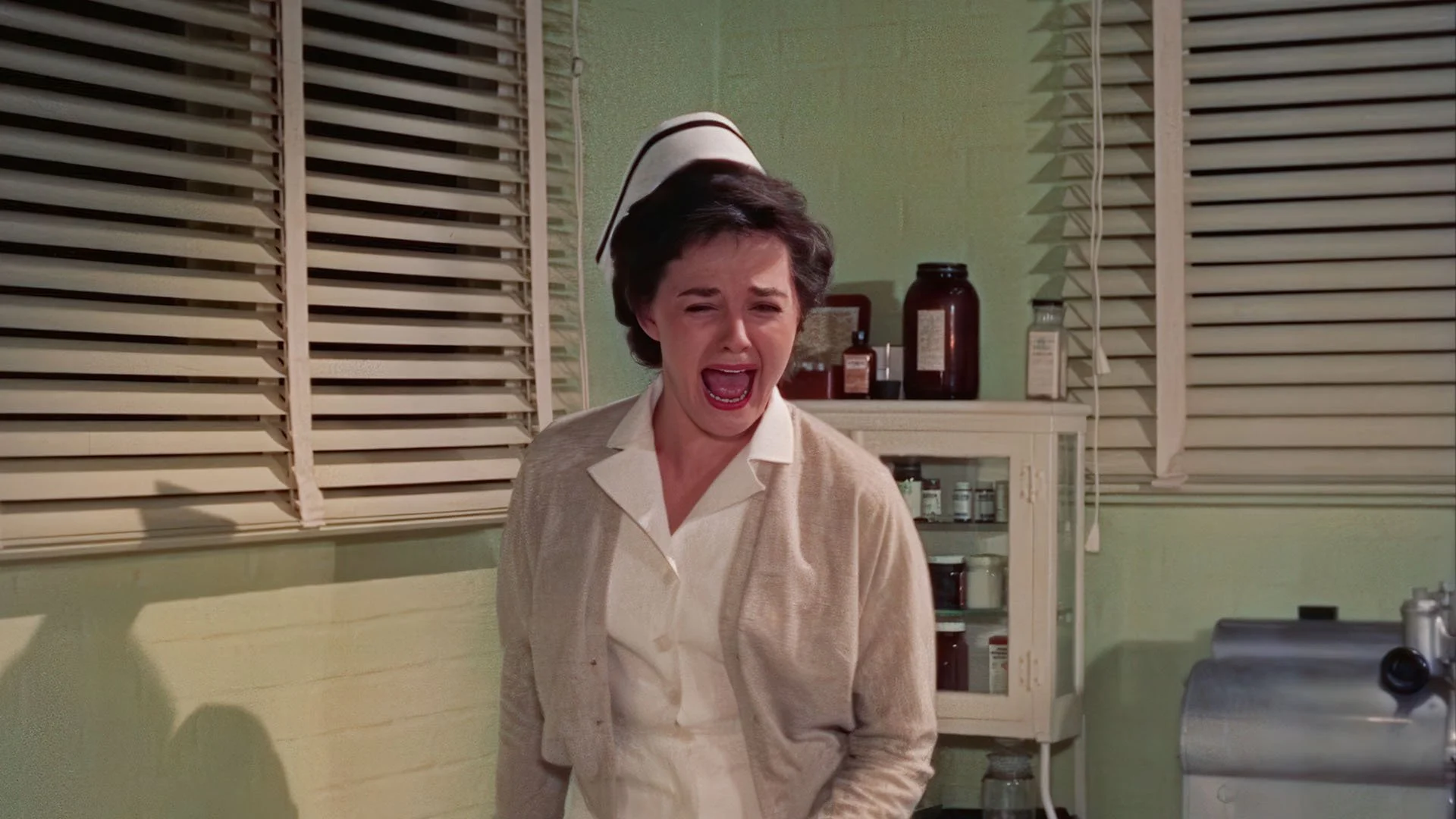
The scream is one of the defining sounds of vintage sci-fi.
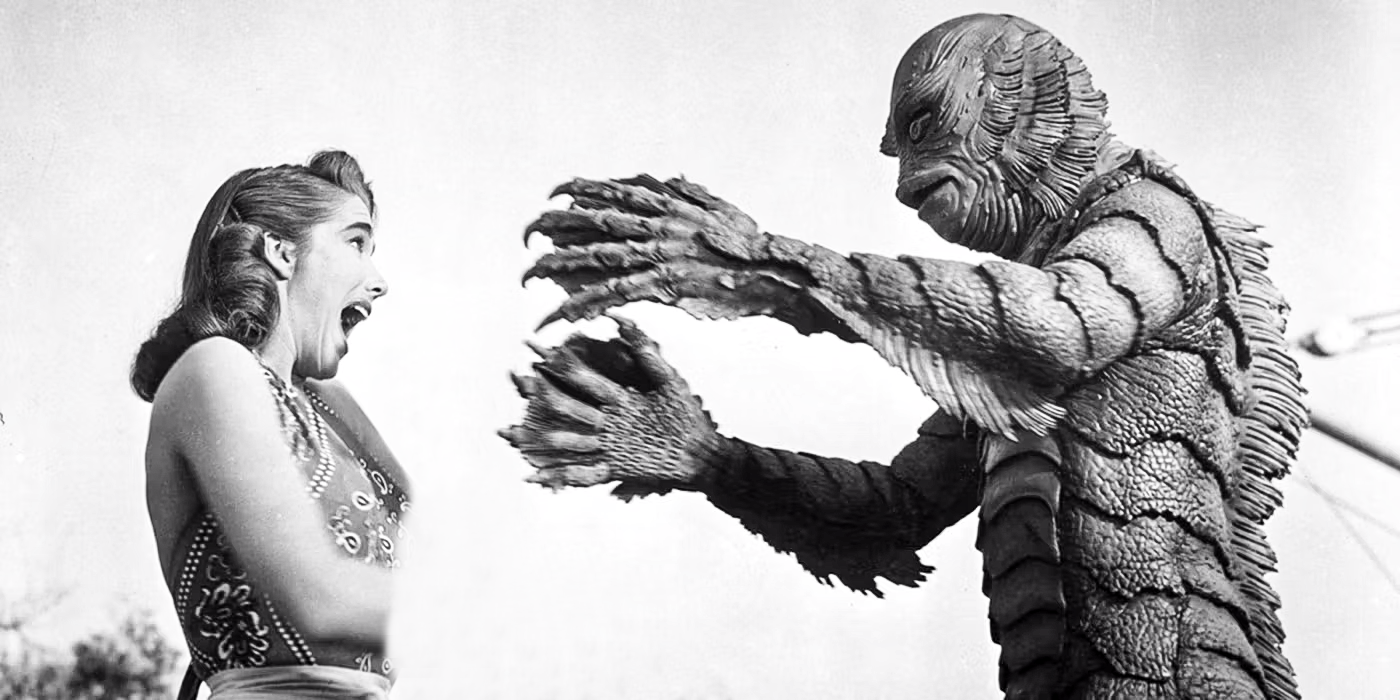
A monster appears. A saucer lands. A door opens. A giant claw enters the frame. Cue the woman screaming.
To be fair, if a ten-story radioactive insect showed up outside my window, I would not respond with quiet academic curiosity either. Screaming is a perfectly reasonable monster policy.
But in many 1950s sci-fi films, women were given fear as a primary function. Their terror told the audience how to feel. Their bodies supplied vulnerability. Their panic made the monster more monstrous. Their rescue gave the hero something urgent to do, and the scream became cinematic punctuation.
It also became marketing. Posters loved women in peril: held by monsters, menaced by aliens, fleeing from giant creatures, reaching dramatically toward the viewer while the male hero prepared to restore order. The woman’s fear became part of the spectacle.
That does not mean the actresses were weak performers. Often they were doing exactly what the genre, the studio, and the poster demanded. The problem was not individual talent. The problem was imagination. Too many films imagined women mainly as emotional amplifiers for male action.
The monster roars. The woman screams. The man grabs the gun. The plot moves. Efficient? Sure. Limiting? Absolutely.
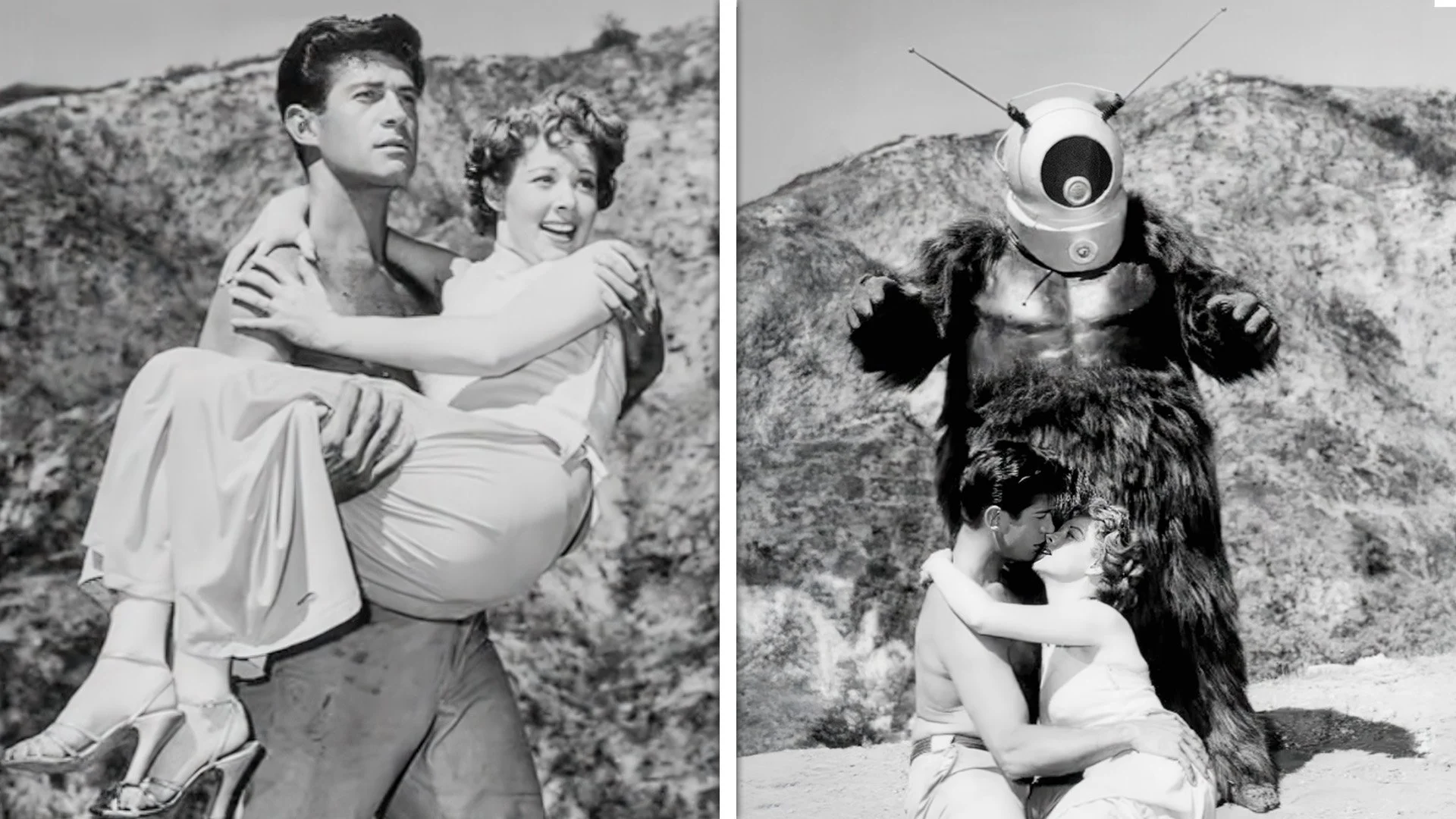
Being Saved Was Almost a Character Arc
The “woman who must be saved” is everywhere in classic adventure storytelling, and 1950s sci-fi inherited that machinery without much embarrassment.
A woman is captured by the alien. Threatened by the monster. Hypnotized by the invader. Carried away by the robot. Trapped in the lab. Endangered by the experiment. Placed in the path of destruction.
Then the male hero acts. The rescue proves his courage, his masculinity, and often his romantic worth. The woman’s danger becomes part of his story.
Again, this is not only a 1950s problem. It runs through pulp, horror, serials, fantasy, comics, and action cinema. But sci-fi makes the contradiction especially visible because the genre is supposed to be asking “what if?” What if humanity reaches the stars? What if life exists on other planets? What if machines become intelligent? What if radiation mutates nature? What if civilization collapses?
Apparently, “what if women drove the story?” was a much harder question.
The future had room for death rays.
It had less room for female agency.
Helen Benson Actually Gets Something Important to Do
Now, let’s give credit where credit is due.
Helen Benson in The Day the Earth Stood Still is not just a decorative sci-fi girlfriend. Played by Patricia Neal, Helen is a World War II widow and mother who becomes one of the few humans Klaatu truly trusts. TCM describes her as the Earthling Klaatu relates to most closely, and in the film’s plot she plays a crucial role by delivering the command “Klaatu barada nikto” to Gort after Klaatu is shot. That matters.
Helen is not the scientist. She is not the military leader. She is not the visiting alien philosopher. But she is morally alert, emotionally grounded, and brave when it counts. She listens. She judges character. She takes action under pressure. She becomes the human bridge between Klaatu’s warning and Earth’s survival.
Is the role still shaped by 1950s gender expectations? Absolutely. Helen is maternal, compassionate, and positioned partly as the moral heart of the film. But that moral role has real power in the story. She is not simply screaming in the corner while men solve everything. She carries the phrase that saves the world. Not bad for someone surrounded by men making terrible decisions in suits.
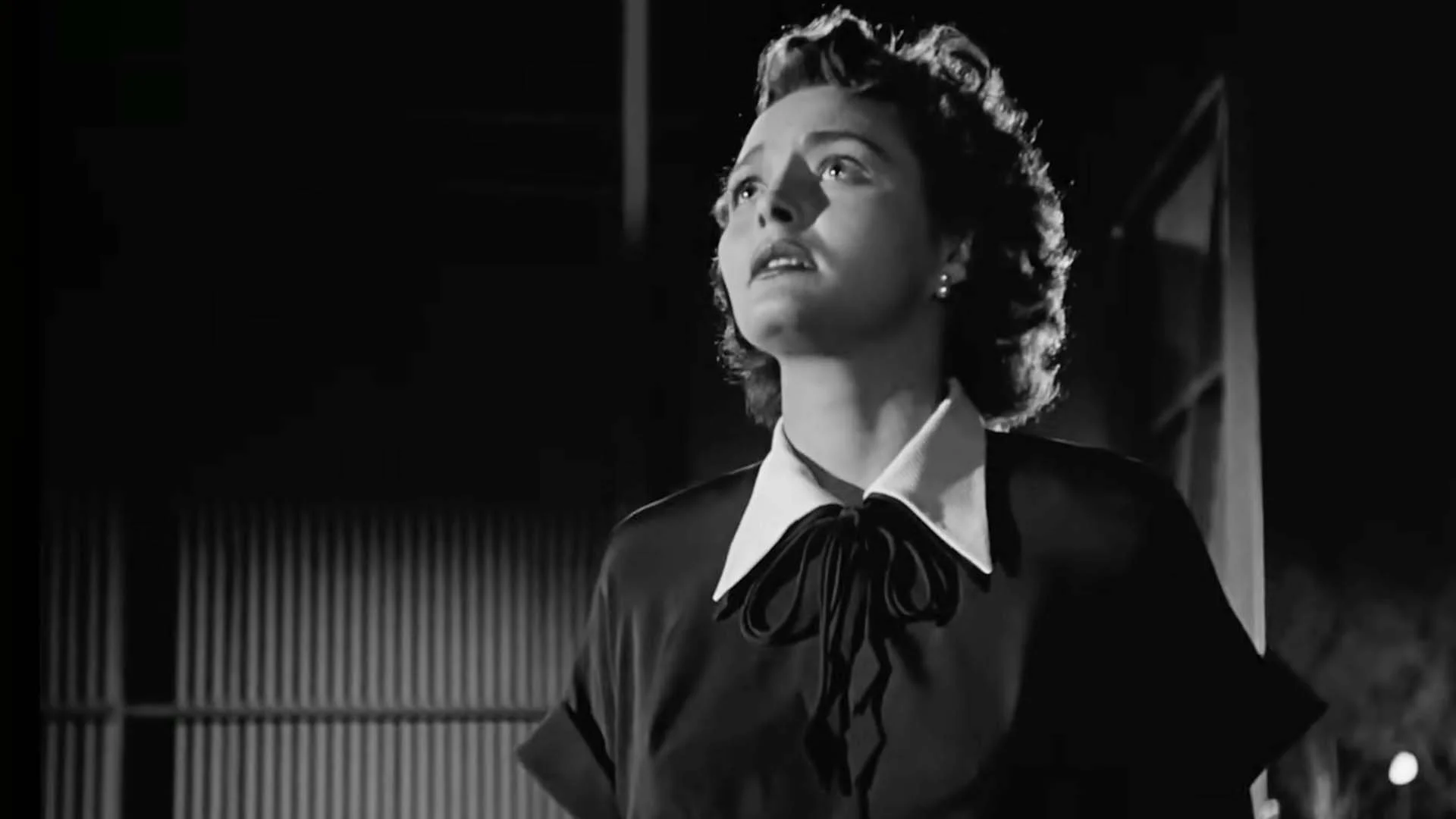
Helen Benson does not command the robot with force. She does it because she listened when everyone else was busy panicking.
Altaira Was Both Breakthrough and Problem
Then there is Altaira Morbius in Forbidden Planet.
Played by Anne Francis, Altaira is one of the most visually iconic women in 1950s sci-fi: ethereal, isolated, luminous, and surrounded by the spectacular design world of Altair IV. Forbidden Planet itself was a major production, with TCM listing Anne Francis in the cast alongside Walter Pidgeon, Leslie Nielsen, Warren Stevens, and Earl Holliman.
Altaira is fascinating because she both breaks and reinforces the pattern.
On one hand, she is not just a secretary in a lab. She is part of the film’s strange alien environment. She has been raised on another planet. She moves through this advanced world as if it is normal. She has a connection to Robby the Robot, to Morbius, and to the mysterious psychological forces underneath the story.
On the other hand, the film often treats her as an object of male discovery. The arriving crew reacts to her beauty with the subtlety of sailors who have been hit over the head with a pinup calendar. Much of her arc is shaped by male desire, paternal control, and sexual innocence framed as both wonder and problem. So Altaira is not nothing. But she is not fully free either.
She is the daughter of genius, the object of desire, the innocent woman in the garden, the prize of the new world, and the figure through whom male anxieties play out. That is a lot to carry while wearing space couture. Altaira is memorable because the film is memorable.
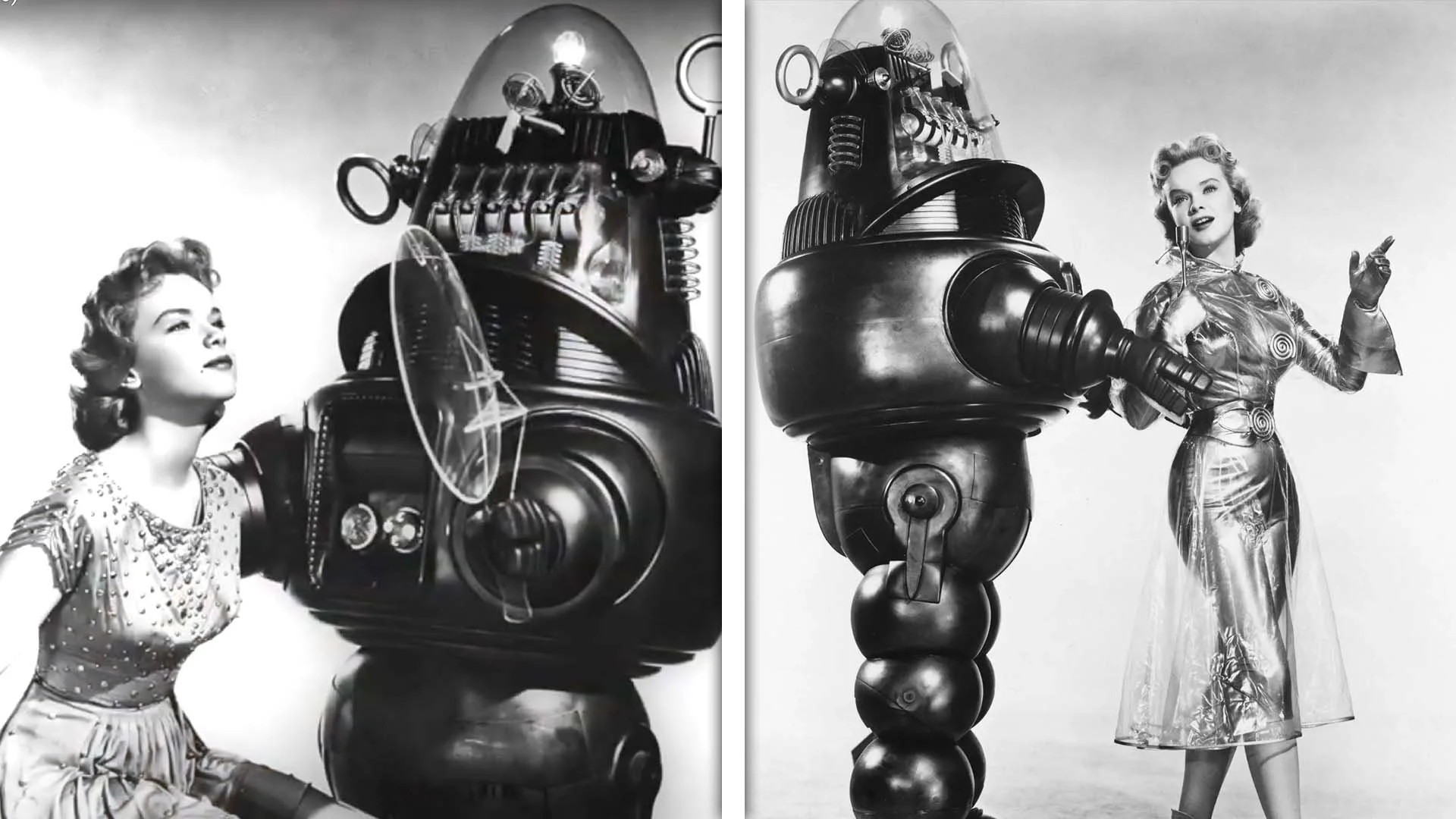
Altaira is a reminder that even high-end science fiction could imagine astonishing worlds while still treating women as territory.
Attack of the 50 Foot Woman Let Female Anger Get Huge
Attack of the 50 Foot Woman from 1958 is not exactly subtle. That is part of its charm.
The film stars Allison Hayes as Nancy Archer, a wealthy woman trapped in a miserable marriage with a cheating husband. After an alien encounter, she grows to enormous size and goes on a rampage. On the surface, it is pure drive-in madness: giant woman, tiny town, betrayal, destruction, poster-ready spectacle.
Underneath, it is impossible not to notice the gender rage.
Nancy is dismissed, patronized, betrayed, and treated as unstable before the movie literalizes her anger by making her physically enormous. One scholarly article describes the film as symbolizing a “return of the repressed” and anticipating later feminist concerns, while other criticism has read it as a campy but revealing fantasy of female oppression and explosive agency.
Is it a feminist masterpiece? Let’s not get carried away in our rocket boots. But it is fascinating because it takes a woman who has been belittled and makes her impossible to ignore. The movie may fear her power as much as it understands it, but that fear is the point. A giant woman stomping through the fragile architecture of male control is a pretty strong visual, even if the film itself is too pulpy to know exactly what to do with it.
Nancy Archer does not politely ask for agency. She becomes 50 feet tall and takes up the space denied to her.
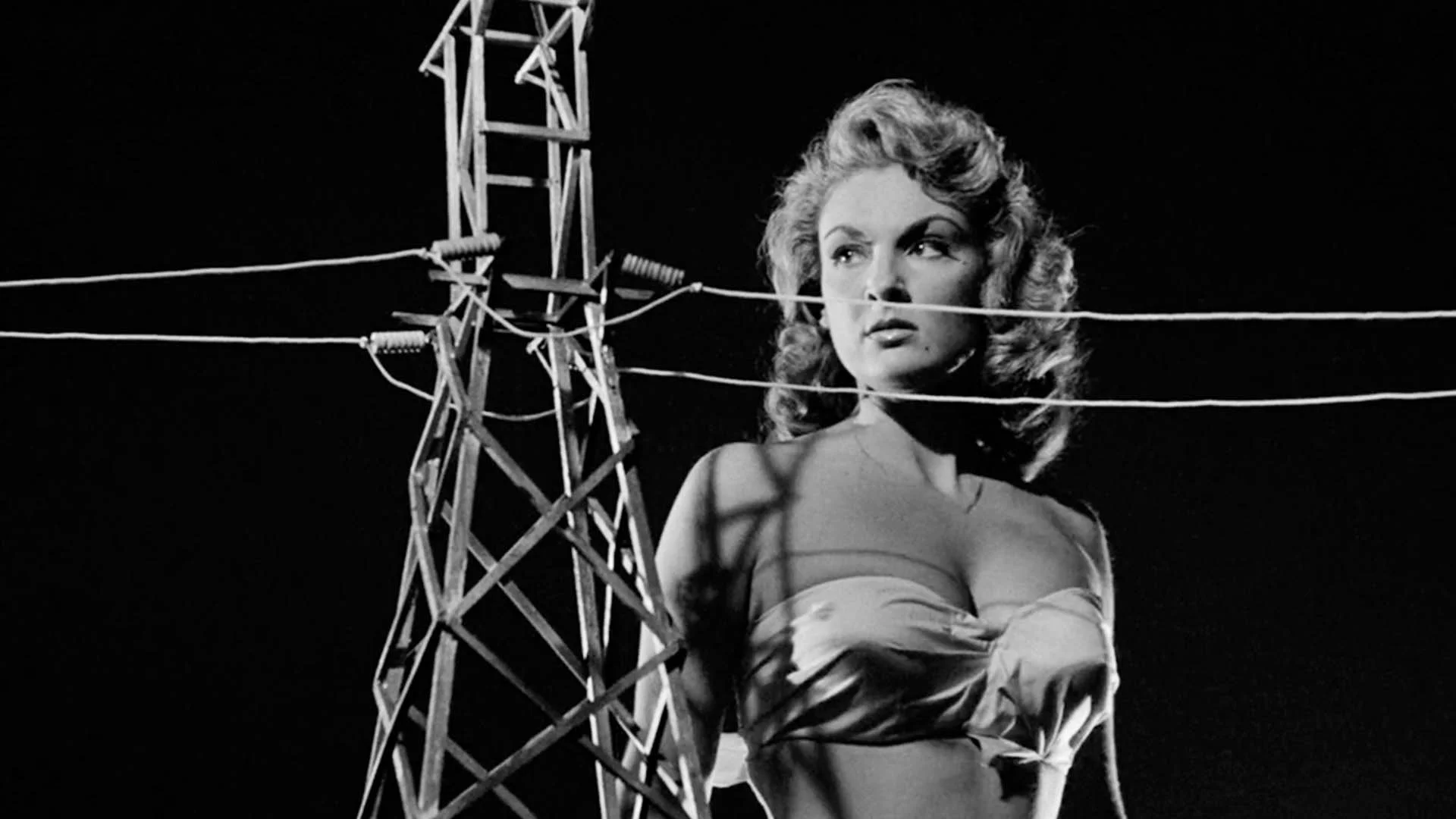
Sometimes symbolism arrives wearing a torn bedsheet and knocking down power lines.
The Moral Anchor Was Real — But Still a Box
One role 1950s sci-fi often gave women more seriously was the moral anchor.
This is the woman who senses what matters emotionally while the men debate weapons, science, procedure, or authority. She reminds the film that human life matters. She sees vulnerability. She protects the child. She recognizes compassion where others see only threat. She softens the hero or humanizes the alien.
That role can be meaningful. But it can also be a box.
The moral anchor gives women value, but often a very specific kind of value. Emotional wisdom. Compassion. Nurture. Sacrifice. Patience. Understanding. These are not bad qualities. They are essential human qualities. The problem is when the genre hands those qualities mostly to women while handing action, intellect, authority, and technical mastery mostly to men.
Women get heart. Men get the control room.
Sci-fi did not invent that setup. It just put it in a spaceship.
That division shows up everywhere in mid-century storytelling. It reflects the domestic ideology of the period, where women were frequently framed as guardians of home, morality, and emotional stability while men moved through public systems of work, science, military power, and exploration.
The Future Could Imagine Aliens Better Than Women
Here is the blunt truth: 1950s sci-fi was often better at imagining alien biology than female interiority.
That sounds harsh, but watch enough of these films and the pattern becomes hard to miss. An alien might get a whole philosophy. A robot might get moral complexity. A monster might get a tragic origin. A scientist might get an ethical crisis. A military officer might get a speech about humanity’s survival.
The woman gets worried. Or beautiful. Or kidnapped. Or suspicious. Or loyal. Or dead. That is not every film, and it is not every character. But it is enough of the landscape to matter.
We can love these movies and still see the limits. In fact, seeing the limits makes the movies more interesting. They become cultural artifacts, not just entertainment.
They show us what the era feared, what it desired, what it could imagine, and what it could not. The films reveal themselves by what they forget to question.
Why This Still Matters for Sci-Fi Fans
Science fiction is supposed to expand possibility.
That is the whole bargain. Sci-fi asks us to imagine other worlds, other futures, other kinds of life, other ways of being. It is the genre of “what else could be true?”
So when sci-fi repeats the same old gender roles, the failure feels extra loud.
A western may be stuck in old codes. A domestic melodrama may be about the codes. But science fiction has no excuse for building a faster-than-light engine and then leaving half of humanity in the passenger seat.
That is why revisiting women in 1950s sci-fi is useful. It sharpens our eye. It helps us understand how genre carries the values of its time, even when it is pretending to escape them. It also helps us appreciate the moments when the pattern cracks: Helen Benson acting with courage, Ellen Fields giving emotional credibility to alien contact, Nancy Archer turning female anger into a drive-in monument.
Those moments matter because they show the possibility buried inside the limitation. The genre could have done more. Sometimes it almost did.
Conclusion: The Real Future Needed Better Roles
Women in 1950s sci-fi were often asked to scream, serve, assist, wait, love, doubt, believe, and be saved.
They did those things under flying saucers, beside robots, in laboratories, across radioactive deserts, and inside some of the most iconic images the genre ever produced. The movies were busy imagining tomorrow, but tomorrow kept arriving with yesterday’s assumptions packed in the cargo hold. That is the contradiction.
The future had rockets, robots, and alien civilizations — but still struggled to imagine women as full participants.
And that does not mean we throw the whole era into the incinerator. It means we watch with both eyes open. One eye for the beauty, the weirdness, the pulp joy, the matte paintings, the theremin moods, the giant monsters, the wonderful bad science. The other eye for the limits, the roles, the silences, the coffee cups, the screams.
Classic sci-fi is more interesting when we let it be complicated. Tomorrow had rayguns. But somehow, someone still had to serve the coffee.
FAQ
-
No. Some women characters are memorable, sympathetic, brave, or more complex than the basic stereotype. But the genre often limited women to girlfriends, victims, assistants, daughters, or moral anchors rather than full drivers of the story.
-
Helen Benson in The Day the Earth Stood Still is a good example because she plays a crucial role in the story’s resolution. Ellen Fields in It Came from Outer Space also has more presence than many supporting sci-fi girlfriends of the era. Nancy Archer in Attack of the 50 Foot Woman is fascinating because the film turns female anger into literal size and spectacle.
-
Screaming was part of the genre’s visual and emotional machinery. Women in peril helped sell danger, heighten suspense, and give male heroes someone to rescue. It was also a marketing image used heavily in posters and pulp-style promotion.
-
Yes. The films often reflected postwar expectations around domesticity, marriage, male authority, women’s emotional labor, and the idea that men belonged in public worlds of science, work, and military power while women belonged closer to romance, home, and support roles.
-
Absolutely. Enjoying them does not require pretending they were perfect. The better move is to watch them with affection and awareness: love the monsters, the robots, the saucers, and the strange visual worlds, while also noticing what the films failed to imagine.

The monsters could be grotesque. The people had to behave.